
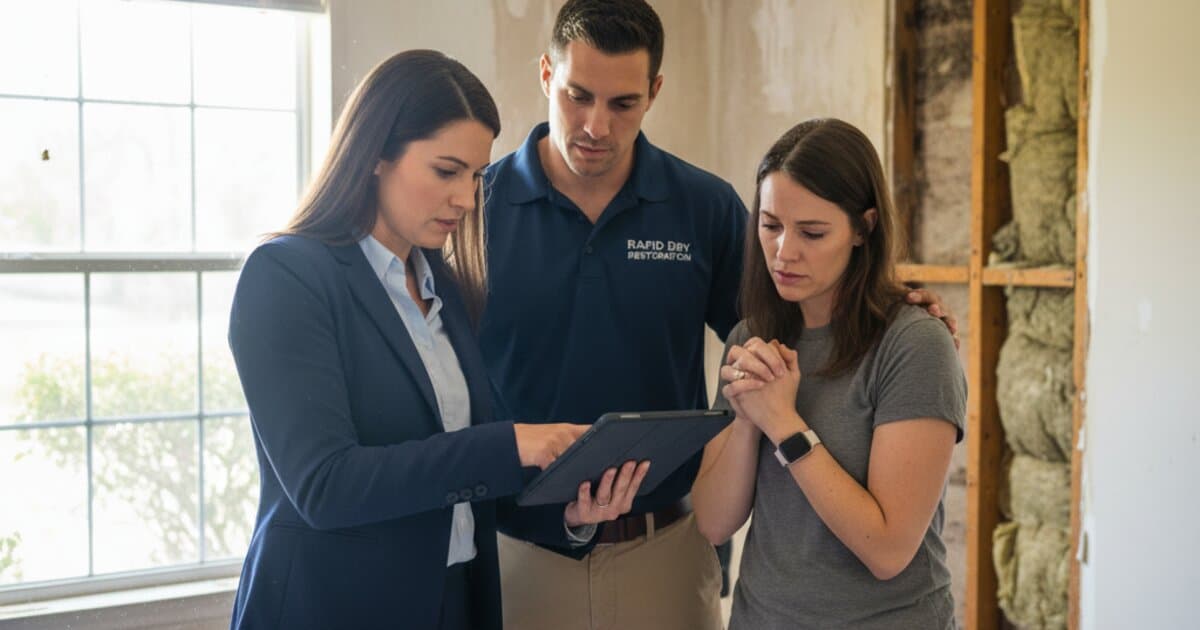
Filing an insurance claim after property damage can feel like navigating a maze — especially when you're already dealing with the stress of a damaged home. Understanding the process before you're in the middle of it gives you a significant advantage. According to the Insurance Information Institute, water damage accounts for roughly 29% of all homeowners insurance claims, with the average claim totaling $12,514. Whether you're facing water damage, fire, mold, or storm damage, here's what to expect from start to finish.
Step-by-Step: The Insurance Claims Process
Step 1: Document the Damage Immediately
Before touching anything, photograph and video all visible damage — walls, floors, ceilings, personal belongings, and the source of damage if identifiable. The more thorough your documentation, the stronger your claim. FEMA recommends keeping a home inventory with photos and receipts as part of your emergency preparedness plan, and this advice is just as critical after damage occurs.
Step 2: File Your Claim Within 24 to 48 Hours
Contact your insurance company as soon as possible. Most Florida policies require prompt notification, and delays can jeopardize your claim. When you call, note your claim number, the name of your assigned adjuster, and any deadlines they communicate. Filing quickly also demonstrates that you're taking the damage seriously and complying with your policy's mitigation requirements.
Step 3: Meet Your Insurance Adjuster
Your insurance company will send an adjuster to inspect the damage, usually within a few days of filing. The adjuster's job is to assess the scope and cost of the damage from the insurer's perspective. Be present during this inspection if possible, and point out all areas of damage — including hidden areas like inside wall cavities, under flooring, and in attic spaces. The IICRC S500 standard emphasizes that moisture can be trapped in concealed areas and must be identified through professional moisture mapping, not just visual inspection.
Step 4: Review the Estimate
The adjuster will generate an estimate, typically using Xactimate software, which calculates costs based on local labor and material rates. Review this estimate carefully. Initial estimates often undercount the full scope of damage — this is not necessarily intentional, but adjusters work from what they can see during a single visit. According to the Insurance Information Institute, the average homeowner may not realize that supplemental claims are a standard part of the process.
Step 5: Choose Your Restoration Contractor
You have the right to choose your own restoration contractor — you are not required to use the company your insurance company recommends. Choose an IICRC-certified company with experience in insurance claims. People First Restoration works with all major insurance carriers and uses Xactimate to ensure our estimates align with industry standards.
Step 6: Begin Restoration Work
Once your claim is approved, restoration work can begin. A professional company will handle mitigation first (stopping further damage), then move into full restoration. For water damage repair, the IICRC S500 standard calls for professional drying to bring materials to equilibrium moisture content within 3 to 5 days. Fire damage restoration and storm damage repair may involve longer timelines depending on severity.
Step 7: Final Walkthrough and Claim Closure
After all work is completed, do a thorough walkthrough with your restoration company. Verify that all damage has been addressed and all work meets your expectations. Your restoration company will submit final documentation to your insurance company, and your claim will be closed once everything is settled.
Common Mistakes That Cost Homeowners Money
Waiting Too Long to File
Every day you delay filing increases the risk that your insurer questions the timeline or that secondary damage (like mold) complicates the claim. The CDC confirms that mold can begin growing within 24 to 48 hours of water exposure, turning a straightforward water claim into a much larger remediation project.
Not Documenting Enough
A few photos aren't sufficient. Document every room, every angle, every damaged item. Video walkthroughs are especially valuable. If you don't document it, it may not be covered.
Accepting the First Offer Without Question
The initial estimate from your adjuster is a starting point, not a final verdict. If your restoration company identifies additional damage, a supplemental claim can be filed. This is standard practice and not adversarial — it's simply ensuring the full scope of damage is accounted for.
DIY Cleanup Before the Adjuster Visits
While you should take reasonable steps to prevent further damage (mopping up standing water, turning off the water supply), avoid major cleanup or demolition before the adjuster has inspected. Removing damaged materials before they're documented can result in denied coverage for those items.
Not Understanding Your Policy
Read your policy before you need it. Know your deductible, your coverage limits, and any exclusions. The National Flood Insurance Program notes that flood damage requires a separate policy with a 30-day waiting period — a detail many Florida homeowners discover too late.
How a Restoration Company Helps with Your Claim
Working with an experienced restoration company can make a significant difference in your claim outcome. Here's how People First Restoration supports you through the process:
- Xactimate estimates — We generate detailed, line-item estimates in the same software your insurance adjuster uses, ensuring accuracy and consistency
- Supplement claims — When our technicians identify damage not included in the initial adjuster estimate, we submit formal supplements with supporting documentation and moisture readings
- Direct adjuster communication — Our team communicates directly with your insurance adjuster throughout the project, reducing miscommunication and delays
- Direct insurance billing — We bill your insurance company directly, so there's no large upfront cost to you. You're only responsible for your deductible.
Florida-Specific Considerations
Assignment of Benefits (AOB)
Florida has specific laws governing Assignment of Benefits, which allows a restoration company to bill your insurance company directly on your behalf. Recent legislative changes have tightened AOB requirements, so work with a company that understands current Florida law and operates transparently.
Florida's Insurance Landscape
Florida has the second-highest homeowners insurance rates in the nation according to the Insurance Information Institute. The average Florida homeowner pays significantly more than the national average, which makes understanding your coverage and maximizing your claim even more important.
Hurricane Deductibles vs. Standard Deductibles
Florida policies typically have two separate deductibles. Your standard deductible (usually $1,000 to $2,500) applies to most claims. Your hurricane deductible (typically 2% to 5% of your home's insured value) applies only when a hurricane causes the damage. On a $350,000 home, a 2% hurricane deductible means $7,000 out of pocket — a critical distinction during storm season.
Timeline Expectations: Claim Filed to Completion
Understanding realistic timelines helps set expectations:
- Claim filed to adjuster visit: 2 to 7 days (may be longer after widespread storm events)
- Adjuster visit to initial estimate: 3 to 10 days
- Water damage mitigation: 3 to 5 days for drying per IICRC standards
- Mold remediation: 1 to 2 weeks depending on scope
- Fire damage restoration: 2 weeks to several months depending on severity
- Full reconstruction: 1 to 6 months depending on scope and permit requirements
- Claim closure after work completion: 1 to 4 weeks
After a major hurricane or widespread storm event, these timelines can extend significantly due to the volume of claims. The Florida Department of Financial Services provides resources for homeowners experiencing delays through their Division of Consumer Services hotline.
Get Help With Your Claim Today
Don't navigate the insurance claims process alone. For a comprehensive resource covering every aspect of property damage insurance, explore our insurance claims guide. If your claim has been denied, see our guide on next steps after a denied insurance claim. People First Restoration offers a free inspection, direct insurance billing, and no upfront cost to homeowners. We handle the paperwork, communicate with your adjuster, and make sure your claim reflects the true scope of damage.
Call us at (888) 278-8054 — we're available 24/7 for emergency restoration services throughout Central Florida.
Sources
- Insurance Information Institute (III) — Statistics on water damage claim frequency (29% of all homeowners claims), average claim costs ($12,514), and Florida's insurance rate rankings.
- IICRC S500 Standard for Professional Water Damage Restoration — Industry standards for professional moisture mapping, drying timelines, and restoration protocols.
- FEMA (Federal Emergency Management Agency) — Homeowner documentation and emergency preparedness guidelines for property damage claims.
- Centers for Disease Control and Prevention (CDC) — Mold growth timelines after water exposure and associated health risks.
- Florida Department of Financial Services — Consumer resources for insurance claim disputes, Assignment of Benefits regulations, and hurricane deductible requirements.