
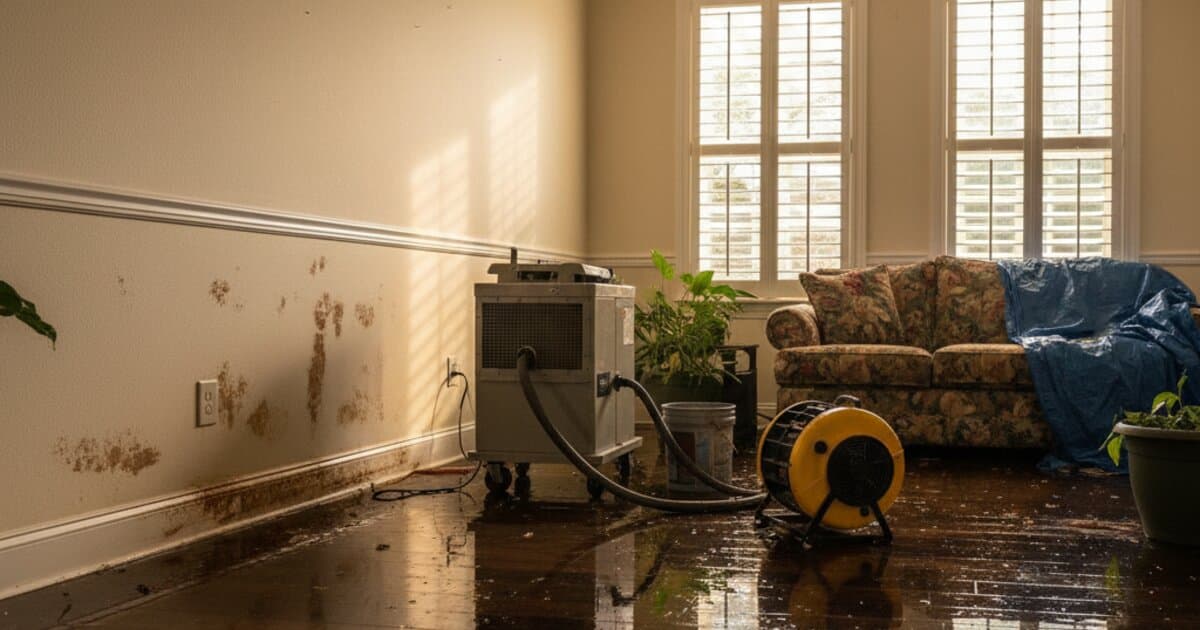
Discovering water damage in your home is alarming, but acting quickly in the first few hours can make a significant difference in the extent of the damage and the cost of repairs. According to FEMA, just one inch of flood water can cause approximately $25,000 in damage to your home. Whether it's a burst pipe, a roof leak during a Florida thunderstorm, or flooding from heavy rains, here's what you need to do immediately.
1. Ensure Safety First
Before anything else, make sure everyone in your home is safe. If there's standing water near electrical outlets or appliances, do not wade through it. Turn off the electricity at the breaker panel if you can safely reach it. If the water damage is severe or the structure feels compromised, evacuate and call for professional help.
2. Stop the Water Source
If the water damage is caused by a plumbing issue such as a burst pipe or a leaking water heater, shut off the main water supply to your home. The main shut-off valve is typically located near the water meter or where the main water line enters your home. Stopping the flow of water is critical to preventing further damage. The Insurance Information Institute reports that water damage accounts for roughly 29% of all homeowners insurance claims, making it one of the most common — and costly — property emergencies.
3. Call People First Restoration
The sooner you call a professional restoration company, the better your outcome will be. People First Restoration offers 24/7 emergency response throughout Central Florida with a free inspection and direct insurance billing. Our team can typically be on-site within hours of your call. We'll begin the water extraction, drying, and mitigation process immediately to minimize damage. According to the IICRC S500 Standard for Professional Water Damage Restoration, professional drying should bring materials to equilibrium moisture content within 3 to 5 days — something that requires commercial-grade equipment.
Call us at (888) 278-8054 — available 24 hours a day, 7 days a week.
4. Document the Damage
Before you start cleaning up, take photos and videos of all affected areas. This documentation is essential for your insurance claim. Photograph damaged walls, floors, furniture, personal belongings, and the source of the water if visible. The more thorough your documentation, the smoother your insurance claim process will be. The average homeowners insurance claim for water damage is $12,514 according to the Insurance Information Institute, so detailed records can make a real difference in your settlement.
5. Contact Your Insurance Company
Notify your homeowner's insurance company as soon as possible. Most policies require timely notification of damage. When you work with People First Restoration, our team can help you navigate the insurance claims process, provide detailed damage reports, and communicate directly with your adjuster.
6. Remove Standing Water
If the water level is shallow and it's safe to do so, use towels, mops, or a wet/dry vacuum to remove standing water. However, for significant flooding, professional water extraction equipment is necessary. Our industrial-grade pumps and extractors can remove water far more quickly and thoroughly than household tools.
7. Begin Drying and Ventilation
Open windows if weather permits and use fans to increase air circulation. However, avoid using your home's HVAC system if the ductwork may be contaminated. Professional restoration companies use industrial dehumidifiers and air movers that are far more effective at drying out structures and preventing mold growth. The EPA recommends maintaining indoor humidity between 30% and 60% to prevent mold — a target that's difficult to reach in Florida without professional drying equipment.
Why Speed Matters in Central Florida
Florida's warm, humid climate creates the perfect conditions for mold growth. Mold can begin developing within 24 to 48 hours of water damage, and the CDC notes that exposure to damp and moldy environments is associated with upper respiratory symptoms, coughing, and wheezing. This is why immediate action is so critical. The longer water sits, the more damage it causes — not just to your home's structure, but potentially to your family's health. With NOAA reporting that Florida averages more than 100 days of thunderstorm activity annually, the risk of water intrusion is a year-round concern.
At People First Restoration, we understand the urgency. That's why we offer round-the-clock emergency service to homeowners throughout Volusia, Seminole, Orange, and Osceola counties. We provide free on-site inspections so you know the full scope of damage before any work begins.
The Bottom Line
Water damage is stressful, but you don't have to face it alone. For a comprehensive overview of the full restoration process, explore our complete water damage guide. For immediate action steps and emergency contacts, see our emergency response guide. Call People First Restoration at (888) 278-8054 for immediate assistance. We'll handle the restoration so you can focus on what matters most — your family.
Sources
- FEMA (Federal Emergency Management Agency) — Flood damage cost estimates and mitigation guidance for homeowners.
- Insurance Information Institute (III) — Data on homeowners insurance claims frequency and average water damage claim costs.
- IICRC S500 Standard for Professional Water Damage Restoration — Industry standards for professional water damage drying and restoration timelines.
- U.S. Environmental Protection Agency (EPA) — Indoor humidity guidelines for mold prevention.
- Centers for Disease Control and Prevention (CDC) — Health effects associated with exposure to damp and moldy environments.