
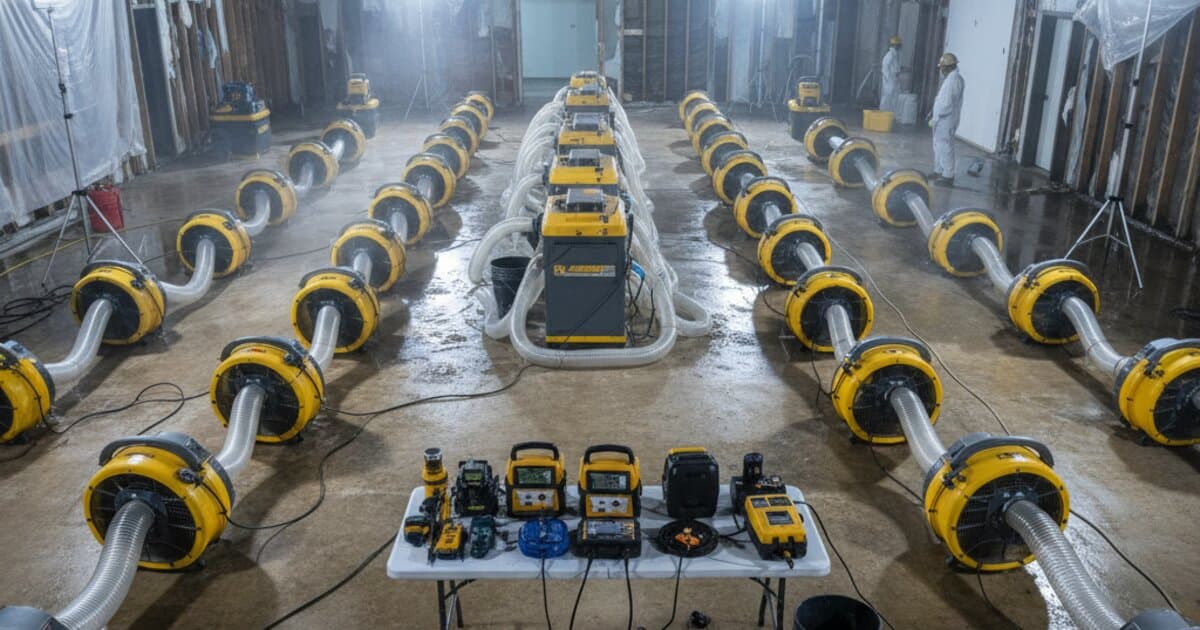
One of the most common questions homeowners ask after discovering water damage is: how long will this take to fix? The answer depends on several factors, but understanding the typical timeline helps you plan, set expectations, and avoid costly delays. According to the IICRC S500 Standard for Professional Water Damage Restoration, professional drying alone should take 3 to 5 days under controlled conditions — and that is just one phase of a multi-step process.
Timeline Overview
A straightforward water damage restoration project typically takes anywhere from one to three weeks from initial response to completion. However, complex jobs involving structural reconstruction can take six weeks or longer. The key variable is the scope of damage. A small kitchen leak with Category 1 (clean) water may be resolved in under a week, while a Category 3 (black water) sewage backup affecting multiple rooms could take months from mitigation through full reconstruction.
Factors That Affect the Timeline
Water Category
The IICRC classifies water damage into three categories that directly impact restoration time:
- Category 1 (Clean Water) — Water from a broken supply line or faucet. Lowest health risk and fastest to remediate.
- Category 2 (Gray Water) — Water from appliance overflows, washing machines, or dishwashers. Contains contaminants that require additional cleaning and antimicrobial treatment.
- Category 3 (Black Water) — Water from sewage backups, flooding, or storm surge. Requires the most extensive remediation, including removal and disposal of contaminated materials.
Damage Class
The IICRC also assigns a class (1 through 4) based on the rate of evaporation and the types of materials affected:
- Class 1 — Minimal water absorption, affecting only part of a room. Fastest drying time.
- Class 2 — Water has wicked up walls 12 to 24 inches. Requires more equipment and time.
- Class 3 — Water has come from overhead, saturating walls, ceilings, insulation, and subflooring.
- Class 4 — Specialty drying situations involving hardwood, stone, or concrete that trap moisture.
Size of the Affected Area
A single bathroom with a burst pipe will dry significantly faster than a full first floor affected by a storm surge or flooding event. Larger areas require more drying equipment and more monitoring time.
Materials Involved
Hardwood floors, plaster walls, and concrete slabs retain moisture far longer than drywall or carpet. Class 4 materials can take two to three times longer to dry than standard building materials.
Phase-by-Phase Breakdown
Phase 1: Emergency Response (1-2 Hours)
When you call People First Restoration at (888) 278-8054, our team can typically arrive within one to two hours. We offer 24/7 emergency response across Central Florida, including Volusia, Seminole, Orange, and Osceola counties. The initial response includes assessing the damage, identifying the water source, and beginning containment. This phase is critical — FEMA estimates that just one inch of flood water can cause approximately $25,000 in damage, and every hour of delay increases the total cost.
Phase 2: Water Extraction (Day 1)
Using industrial-grade pumps and truck-mounted extractors, our team removes standing water as quickly as possible. Professional extraction removes up to 90% of the moisture in a structure, dramatically reducing drying time. For significant flooding, this phase may extend into day two.
Phase 3: Drying and Dehumidification (3-5 Days)
This is the most time-intensive phase. Industrial air movers and commercial dehumidifiers work continuously to bring materials to equilibrium moisture content. The EPA recommends maintaining indoor humidity between 30% and 60% to prevent mold — a target that is especially challenging in Florida's climate without professional equipment. Our technicians monitor moisture levels daily using thermal imaging cameras and pin-type moisture meters to ensure drying stays on track.
Phase 4: Cleaning and Sanitizing (1-2 Days)
Once materials are dry, affected surfaces are cleaned, sanitized, and treated with antimicrobials. Personal belongings are assessed for restoration or replacement. This phase is especially important for Category 2 and Category 3 water events, where contamination requires thorough treatment.
Phase 5: Reconstruction (1-6 Weeks)
If materials were removed during mitigation — drywall, flooring, insulation, cabinetry — property reconstruction is required to restore your home to pre-loss condition. Simple repairs may take a week, while extensive reconstruction involving multiple rooms, plumbing, or electrical work can take four to six weeks or longer.
Why Delays Cost More
Time is money in water damage restoration, and the data proves it. FEMA's $25,000-per-inch damage estimate assumes prompt response. Delayed response compounds costs exponentially. Mold can begin growing within 24 to 48 hours of water exposure, and the CDC reports that mold exposure is associated with upper respiratory symptoms, coughing, and wheezing. Once mold takes hold, you are no longer dealing with water damage alone — you are dealing with mold remediation as well, which adds time and expense.
The Insurance Information Institute reports that the average water damage claim is $12,514, but claims involving secondary mold damage or delayed response are significantly higher.
Tips to Speed Up the Process
- Call immediately. The single most important step is calling a professional restoration company within the first hour. People First Restoration offers a free inspection and can begin work the same day.
- Stop the water source. If a pipe burst or appliance failed, shut off the main water supply before the team arrives.
- Do not delay for insurance. Begin mitigation immediately. Your insurance policy requires you to take reasonable steps to prevent further damage, and waiting for an adjuster to arrive before starting cleanup can result in a denied claim.
- Remove furniture and belongings. If safe to do so, move items away from wet areas to improve airflow and reduce drying time.
- Work with a company that handles insurance billing. People First Restoration offers direct insurance billing and works with your adjuster from day one. This eliminates delays caused by payment disputes or paperwork.
The Bottom Line
Water damage restoration timelines range from under a week for minor incidents to several weeks for major events requiring reconstruction. The most important factor is speed of response. Every hour of delay increases damage, cost, and health risk. For a deeper look at the science behind the structural drying phase, read our guide on the water damage drying process. For a complete overview of the restoration process from start to finish, visit our complete water damage guide.
Call People First Restoration at (888) 278-8054 for a free inspection and immediate emergency response — available 24/7 across Central Florida.
Sources
- IICRC S500 Standard for Professional Water Damage Restoration — Industry standards for water damage classification (Categories 1-3, Classes 1-4) and professional drying timelines.
- FEMA (Federal Emergency Management Agency) — Flood damage cost estimates, including the $25,000-per-inch benchmark for residential water damage.
- U.S. Environmental Protection Agency (EPA) — Indoor humidity guidelines (30-60%) for mold prevention in water-damaged structures.
- Centers for Disease Control and Prevention (CDC) — Health effects of mold exposure, including respiratory symptoms from delayed water damage remediation.
- Insurance Information Institute (III) — Average water damage insurance claim data ($12,514) and claims frequency statistics.