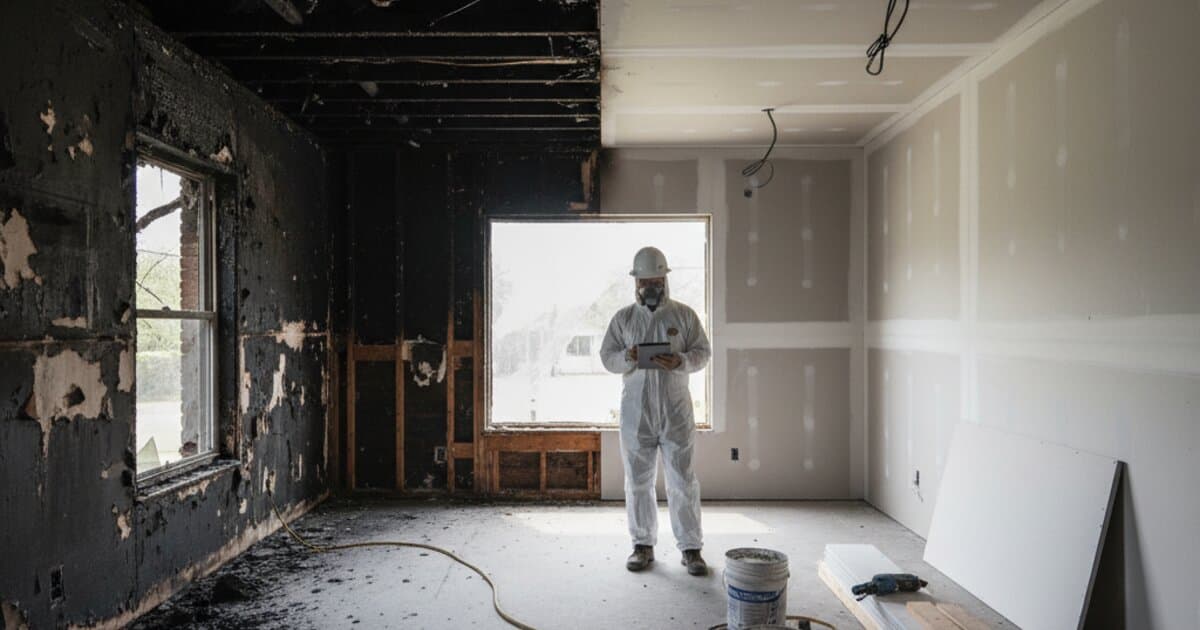
Experiencing a fire in your home is one of the most devastating events a family can face. According to the National Fire Protection Association (NFPA), U.S. fire departments respond to an estimated 346,800 home structure fires per year, resulting in billions of dollars in property damage. Beyond the immediate danger, the aftermath presents an overwhelming series of decisions and tasks. This guide walks Central Florida homeowners through the fire damage recovery process, step by step.
The First 24 Hours
Safety First Do not re-enter your home until the fire department declares it safe. Even after the fire is out, structural damage, toxic fumes, and unstable conditions can be dangerous. The CDC warns that exposure to smoke residue and soot particles can cause upper respiratory symptoms, so wear an N95 mask if you must enter the property briefly.
Contact Your Insurance Company Call your insurance company as soon as possible to begin the claims process. Take note of your claim number and the name of your adjuster. Fire damage claims are among the most complex homeowner claims, and the Insurance Information Institute reports the average fire damage claim is significantly higher than other property damage categories.
Call a Restoration Professional Contact People First Restoration at (888) 278-8054 for immediate assistance. We offer a free damage assessment and direct insurance billing, so there is no upfront cost to you. Our team provides [emergency board-up and tarping services](/services/emergency-restoration-services) to secure your property from weather and unauthorized entry.
Document the Damage If you can safely enter the property, photograph and video all damage. Do not move or dispose of any damaged items until your insurance adjuster has inspected the property.
The First Week
Secure the Property Your restoration company will board up broken windows, tarp damaged roofs, and fence off the property if necessary. Emergency board-up services typically cost between $500 and $2,500 depending on the size of the property, and are usually covered by your insurance policy. This prevents further damage and protects against liability.
Begin Smoke and Soot Cleanup Smoke and soot continue to cause damage after the fire is out. Soot is acidic and will permanently stain and corrode surfaces if not treated quickly. Professional cleaning should begin as soon as the property is cleared by the fire department. Every day of delay increases the likelihood that soot damage becomes permanent.
Address Water Damage The water used to extinguish the fire often causes significant [water damage](/services/water-damage-repair) itself. Water extraction, drying, and dehumidification should begin immediately to prevent [mold growth](/services/mold-removal) — especially critical in Florida's humid climate. The EPA recommends maintaining indoor humidity between 30% and 60% to prevent mold, and the IICRC S500 standard calls for professional drying to bring materials to equilibrium moisture content within 3 to 5 days.
The Restoration Process
Phase 1: Mitigation Emergency services to prevent further damage, including board-up, tarping, water extraction, and temporary power.
Phase 2: Contents Inventory and categorize all personal belongings as salvageable, cleanable, or total loss. Professional content cleaning can often restore items that appear to be destroyed — saving homeowners thousands of dollars compared to full replacement.
Phase 3: Demolition Remove all damaged materials — drywall, insulation, flooring, and structural elements that cannot be salvaged.
Phase 4: Reconstruction Rebuild your home to pre-loss condition or better. This includes framing, drywall, painting, flooring, cabinetry, and all finishing work. Full fire damage reconstruction can range from $20,000 to over $200,000 depending on the severity. Our [property reconstruction](/services/property-reconstruction) team manages every detail.
Phase 5: Final Inspection A thorough inspection ensures all work meets building codes and your expectations.
Working with Insurance
Fire damage claims are typically the largest and most complex property insurance claims. With the NFPA reporting that home fires cause an estimated $8.9 billion in direct property damage annually, insurers have established detailed processes for these claims. Here's how People First Restoration helps:
- We create detailed inventories of all damaged items
- Our estimates are generated using industry-standard Xactimate software
- We communicate directly with your insurance adjuster
- We advocate for fair settlement of your claim
- We supplement claims when necessary to ensure complete coverage
We handle all insurance billing directly so you can focus on your family's recovery, not paperwork.
Emotional Recovery
While this guide focuses on the physical restoration of your property, we understand that fire recovery is also an emotional journey. The American Red Cross provides immediate disaster relief services and can connect fire victims with counseling resources. Don't hesitate to seek support from family, friends, or professional counselors. Remember: your home can be rebuilt. What matters most is that your family is safe.
We're Here to Help
People First Restoration has helped Central Florida homeowners recover from fire damage for years. Our experienced team handles every aspect of the restoration process with care and professionalism. For a comprehensive overview of the full recovery process, explore our complete fire damage guide.
Call us at (888) 278-8054 for a free assessment — we're available 24/7 for fire damage emergencies.
Sources
- National Fire Protection Association (NFPA) — Annual data on U.S. home structure fires, including frequency (346,800 per year) and total property damage estimates.
- U.S. Environmental Protection Agency (EPA) — Indoor humidity guidelines for preventing mold growth after water and fire damage.
- IICRC S500 Standard for Professional Water Damage Restoration — Industry timelines for professional drying of water-damaged materials (3-5 days to equilibrium moisture).
- Centers for Disease Control and Prevention (CDC) — Health guidance on smoke and soot exposure, including respiratory effects.
- Insurance Information Institute (III) — Statistics on fire damage insurance claims and homeowners policy coverage.